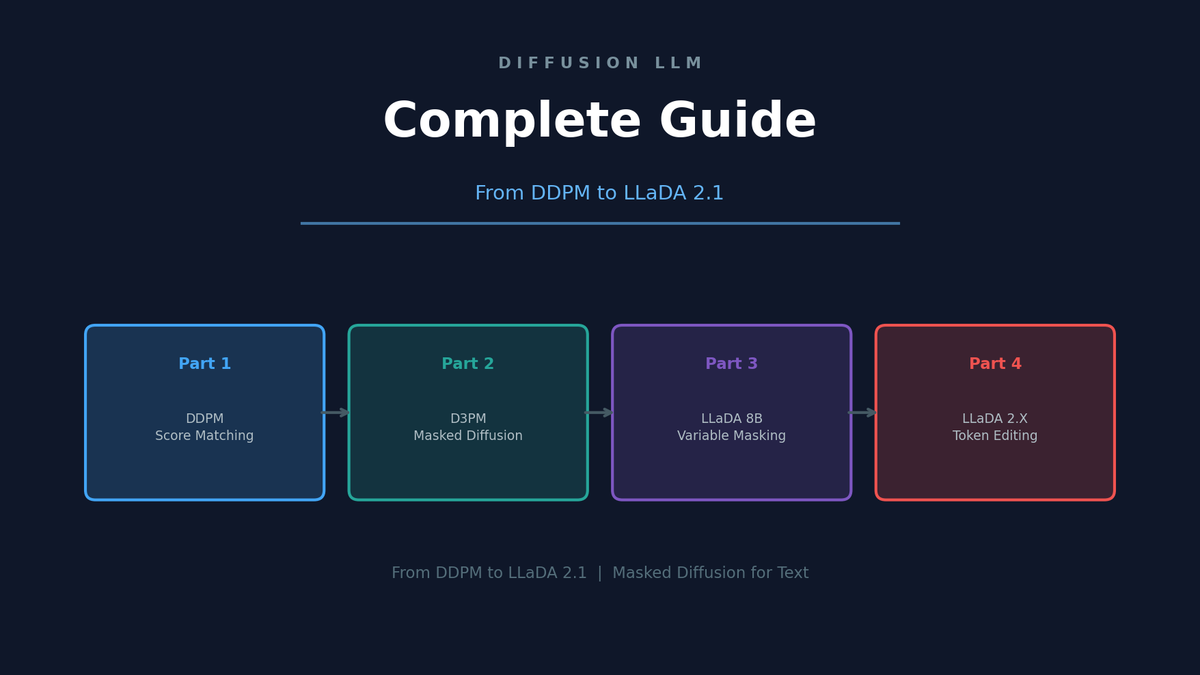
Diffusion LLM Part 4: LLaDA 2.0 -> 2.1 -- Breaking 100B with MoE + Token Editing
MoE scaling, Token Editing (T2T+M2T), S-Mode/Q-Mode, RL Framework -- how LLaDA 2.X makes diffusion LLMs practical.
Diffusion LLM Part 4: LLaDA 2.0 -> 2.1 -- Breaking 100B with MoE + Token Editing
In Part 3, LLaDA proved that "Diffusion LLMs are viable" by scaling Masked Diffusion to the 8B parameter range. But practical challenges remained: inference speed was far behind AR models, and alignment training like RLHF was absent.
In November 2025, Ant Group's InclusionAI began closing this gap with LLaDA 2.0. Then in February 2026, LLaDA 2.1 redefined the speed-quality tradeoff with an innovation called Token Editing.
This post covers the scaling journey from 8B to 100B, the adoption of MoE architecture, and how Token Editing works under the hood.
LLaDA 2.0: The Leap to 100B
Related Posts
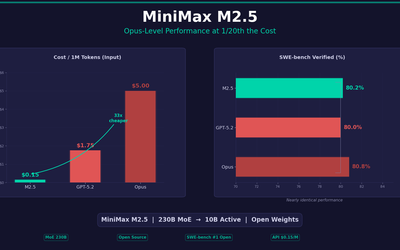
MiniMax M2.5: Opus-Level Performance at $1 per Hour
MiniMax M2.5 achieves SWE-bench 80.2% using only 10B active parameters from a 230B MoE architecture. 1/20th the cost of Claude Opus with comparable coding performance. Forge RL framework, benchmark analysis, pricing comparison.
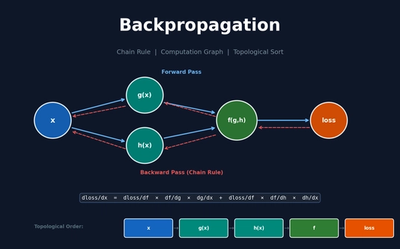
Backpropagation From Scratch: Chain Rule, Computation Graphs, and Topological Sort
How microgpt.py's 15-line backward() works. From high school calculus to chain rule, computation graphs, topological sort, and backpropagation.
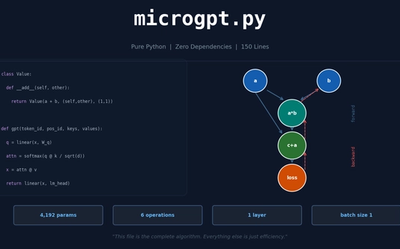
Karpathy's microgpt.py Dissected: Understanding GPT's Essence in 150 Lines
A line-by-line dissection of microgpt.py -- a pure Python GPT implementation with zero dependencies. Training, inference, and autograd in 150 lines.