Temporal RAG: Why RAG Always Gets 'When' Questions Wrong
"Who was the CEO in 2023?" "What about now?" — Why RAG gives wrong answers to these simple questions, and how to fix it.
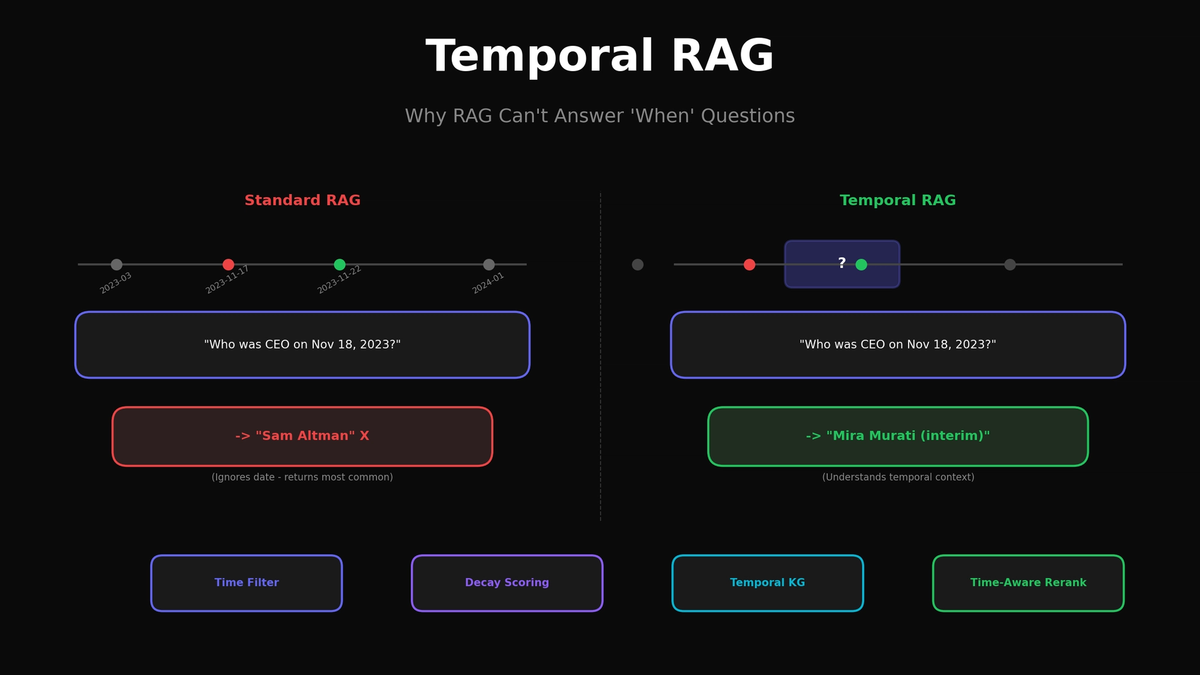
Temporal RAG: Why RAG Always Gets 'When' Questions Wrong
"Who was the CEO in 2023?" "What about now?" — Why RAG gives wrong answers to these simple questions, and how to fix it.
Introduction: RAG's Time Blindness
Ask your RAG system this question:
"Who is OpenAI's CEO?"
Answer: "Sam Altman."
Good. Now ask this:
"Who was OpenAI's CEO on November 18, 2023?"
Answer: "Sam Altman."
Wrong. From November 17-22, 2023, Sam Altman was fired, and Mira Murati was interim CEO.
More Failure Cases
| Question | Expected Answer | RAG Answer | Problem |
|---|---|---|---|
| "Tesla stock price in 2022?" | $100-400 range | "Currently $248" | Ignores timeframe |
| "Last year vs this year Apple earnings?" | Comparison analysis | Mixed data | Time confusion |
| "Who is Twitter's CEO?" | "Linda Yaccarino" (2024) | "Elon Musk" (2022) | Stale data |
| "COVID cases status" | Latest data | 2021 peak data | Recency failure |
| "Company policy back then?" | Historical policy | Current policy | Can't track past |
Why Does This Happen?
The Fundamental Limitation of Embeddings
Vector embeddings only capture semantic similarity. Time information is not included.
# These two sentences have very high embedding similarity
text1 = "Sam Altman is the CEO of OpenAI"  # 2024 document
text2 = "Sam Altman is the CEO of OpenAI"  # 2020 document

# But also high similarity with this
text3 = "Mira Murati is the CEO of OpenAI"  # Nov 2023 document

# Embeddings don't know 'when'
similarity(embed(text1), embed(text2)) ≈ 1.0  # Same content
similarity(embed(text1), embed(text3)) ≈ 0.85  # Both relevant to CEO question
Types of Temporal Questions
1. Point-in-Time Questions
- "What was Q3 2023 revenue?"
- "What was the policy back then?"
- "What happened this time last year?"
2. Time Range Questions
- "Changes from 2020 to 2023"
- "Trends over the last 3 months"
- "What's different this year?"
3. Relative Time Questions
- "Recent news" (when exactly?)
- "How was it before?" (how far back?)
- "What changed since then?"
4. Temporal Comparison Questions
- "Year-over-year growth rate"
- "Before vs after policy change"
- "Performance before and after CEO change"
5. Time Series Questions
- "Quarterly revenue trends"
- "Annual user growth"
- "Monthly traffic changes"
Solution 1: Metadata Filtering
The most basic approach. Add time metadata to documents and filter during search.
Implementation
from datetime import datetime, timedelta
from typing import List, Optional
import chromadb

class TemporalVectorStore:
    """Time-aware vector store"""

    def __init__(self):
        self.client = chromadb.Client()
        self.collection = self.client.create_collection("temporal_docs")

    def add_document(self, doc_id: str, text: str, timestamp: datetime,
                     source: str = None):
        """Add document with time metadata"""
        self.collection.add(
            ids=[doc_id],
            documents=[text],
            metadatas=[{
                "timestamp": timestamp.isoformat(),
                "year": timestamp.year,
                "month": timestamp.month,
                "quarter": (timestamp.month - 1) // 3 + 1,
                "source": source or "unknown"
            }]
        )

    def query_with_time_filter(
        self,
        query: str,
        start_date: Optional[datetime] = None,
        end_date: Optional[datetime] = None,
        top_k: int = 5
    ) -> List[dict]:
        """Time-filtered search"""

        where_filter = {}

        if start_date and end_date:
            where_filter = {
                "$and": [
                    {"timestamp": {"$gte": start_date.isoformat()}},
                    {"timestamp": {"$lte": end_date.isoformat()}}
                ]
            }
        elif start_date:
            where_filter = {"timestamp": {"$gte": start_date.isoformat()}}
        elif end_date:
            where_filter = {"timestamp": {"$lte": end_date.isoformat()}}

        results = self.collection.query(
            query_texts=[query],
            n_results=top_k,
            where=where_filter if where_filter else None
        )

        return results
Temporal Expression Parsing
import re
from dateutil import parser
from dateutil.relativedelta import relativedelta

class TemporalQueryParser:
    """Extract temporal information from queries"""

    def parse(self, query: str, reference_date: datetime = None) -> dict:
        """Extract time range from query"""
        if reference_date is None:
            reference_date = datetime.now()

        result = {
            "original_query": query,
            "start_date": None,
            "end_date": None,
            "temporal_type": "none"
        }

        # Absolute year
        year_match = re.search(r'(\d{4})', query)
        if year_match:
            year = int(year_match.group(1))
            result["start_date"] = datetime(year, 1, 1)
            result["end_date"] = datetime(year, 12, 31)
            result["temporal_type"] = "absolute_year"
            return result

        # Recent N days/months
        recent_days = re.search(r'(last|recent|past)\s*(\d+)\s*days?', query, re.I)
        if recent_days:
            days = int(recent_days.group(2))
            result["start_date"] = reference_date - timedelta(days=days)
            result["end_date"] = reference_date
            result["temporal_type"] = "relative_recent"
            return result

        # Last year/this year
        if 'last year' in query.lower():
            last_year = reference_date.year - 1
            result["start_date"] = datetime(last_year, 1, 1)
            result["end_date"] = datetime(last_year, 12, 31)
            result["temporal_type"] = "relative_year"
            return result

        if 'this year' in query.lower():
            result["start_date"] = datetime(reference_date.year, 1, 1)
            result["end_date"] = reference_date
            result["temporal_type"] = "relative_year"
            return result

        # Current/now
        if any(kw in query.lower() for kw in ['current', 'now', 'today']):
            result["start_date"] = reference_date - timedelta(days=7)
            result["end_date"] = reference_date
            result["temporal_type"] = "current"
            return result

        return result
Limitations
Metadata filtering is simple but has limitations:
- Hard filtering: Documents just outside the boundary are completely excluded
- Sparsity problem: No results if no documents exist in the specified period
- Complex expressions: Hard to handle "early 2020s" type expressions
Solution 2: Temporal Decay
Assign higher weights to recent documents.
Implementation
import numpy as np
from datetime import datetime

class TemporalDecayScorer:
    """Time-based score decay"""

    def __init__(self, half_life_days: int = 30):
        """
        half_life_days: Period for score to halve
        Example: 30 days means a 30-day-old document gets 50% score
        """
        self.half_life_days = half_life_days
        self.decay_rate = np.log(2) / half_life_days

    def exponential_decay(self, doc_date: datetime,
                          reference_date: datetime = None) -> float:
        """Exponential decay function"""
        if reference_date is None:
            reference_date = datetime.now()

        age_days = (reference_date - doc_date).days
        return np.exp(-self.decay_rate * age_days)

    def gaussian_decay(self, doc_date: datetime,
                       target_date: datetime,
                       sigma_days: int = 30) -> float:
        """
        Gaussian decay - peaks near specific point
        Suitable for point-in-time questions
        """
        diff_days = abs((target_date - doc_date).days)
        return np.exp(-(diff_days ** 2) / (2 * sigma_days ** 2))

    def apply_temporal_score(
        self,
        results: List[dict],
        query_type: str = "recent",
        target_date: datetime = None
    ) -> List[dict]:
        """Apply temporal scoring to search results"""

        scored_results = []

        for result in results:
            doc_date = datetime.fromisoformat(result['metadata']['timestamp'])
            semantic_score = result.get('score', 1.0)

            if query_type == "recent":
                # Prefer recent documents
                temporal_score = self.exponential_decay(doc_date)
            elif query_type == "point_in_time" and target_date:
                # Prefer documents near specific point
                temporal_score = self.gaussian_decay(doc_date, target_date)
            else:
                temporal_score = 1.0

            # Final score = semantic score * temporal score
            final_score = semantic_score * temporal_score

            scored_results.append({
                **result,
                'semantic_score': semantic_score,
                'temporal_score': temporal_score,
                'final_score': final_score
            })

        # Re-sort by final score
        scored_results.sort(key=lambda x: x['final_score'], reverse=True)

        return scored_results
Solution 3: Time-Aware Embedding
Encode time information in the embedding itself.
Method 1: Add Time Tokens
class TimeAwareEmbedder:
    """Embed with time context in text"""

    def __init__(self, embedding_model):
        self.model = embedding_model

    def add_temporal_context(self, text: str, timestamp: datetime) -> str:
        """Add time context to text"""
        time_prefix = f"[DATE: {timestamp.strftime('%Y-%m-%d')}] "
        return time_prefix + text

    def embed_with_time(self, text: str, timestamp: datetime) -> np.ndarray:
        """Generate embedding with temporal context"""
        temporal_text = self.add_temporal_context(text, timestamp)
        return self.model.encode(temporal_text)
Method 2: Combine Time Embedding
class TemporalEmbedding:
    """Combine text embedding + time embedding"""

    def __init__(self, text_dim: int = 768, time_dim: int = 32):
        self.text_dim = text_dim
        self.time_dim = time_dim

    def encode_time(self, timestamp: datetime) -> np.ndarray:
        """Encode time as vector"""
        features = np.array([
            timestamp.year / 3000,  # Normalize
            timestamp.month / 12,
            timestamp.day / 31,
            timestamp.hour / 24,
            timestamp.weekday() / 7,
            timestamp.timetuple().tm_yday / 366
        ])
        return features

    def combine_embeddings(self, text_emb: np.ndarray,
                           time_emb: np.ndarray,
                           alpha: float = 0.1) -> np.ndarray:
        """Combine text and time embeddings"""
        combined = np.concatenate([
            text_emb * (1 - alpha),
            time_emb * alpha
        ])
        return combined / np.linalg.norm(combined)
Solution 4: Temporal Reranking
Use LLM to re-evaluate temporal relevance after retrieval.
Implementation
class TemporalReranker:
    """LLM-based temporal-aware reranking"""

    def __init__(self, llm_client):
        self.llm = llm_client

    def rerank(self, query: str, documents: List[dict],
               temporal_context: dict) -> List[dict]:
        """Rerank considering temporal context"""

        prompt = f"""Given the query and temporal context, rank these documents by relevance.

Query: {query}
Temporal Context: {temporal_context}

Documents:
"""
        for i, doc in enumerate(documents):
            prompt += f"""
[{i+1}] Date: {doc['metadata']['timestamp']}
Content: {doc['text'][:500]}...
"""

        prompt += """
For each document, provide:
1. Temporal relevance score (0-1): How well does the document's date match the query's temporal intent?
2. Content relevance score (0-1): How relevant is the content?
3. Final ranking

Output as JSON array."""

        response = self.llm.generate(prompt)
        rankings = self._parse_rankings(response)

        return self._apply_rankings(documents, rankings)
Solution 5: Temporal Knowledge Graph
Build a Knowledge Graph with a time axis.
Concept
Traditional KG: (Sam Altman) --[CEO_OF]--> (OpenAI)

Temporal KG: (Sam Altman) --[CEO_OF {start: 2019, end: 2023-11-17}]--> (OpenAI)
             (Mira Murati) --[CEO_OF {start: 2023-11-17, end: 2023-11-20}]--> (OpenAI)
             (Emmett Shear) --[CEO_OF {start: 2023-11-20, end: 2023-11-22}]--> (OpenAI)
             (Sam Altman) --[CEO_OF {start: 2023-11-22, end: null}]--> (OpenAI)
Implementation
from dataclasses import dataclass
from datetime import datetime
from typing import Optional, List

@dataclass
class TemporalTriple:
    """Triple with temporal information"""
    subject: str
    predicate: str
    object: str
    valid_from: datetime
    valid_to: Optional[datetime] = None  # None = currently valid
    confidence: float = 1.0
    source: str = ""

class TemporalKnowledgeGraph:
    """Time-aware Knowledge Graph"""

    def __init__(self):
        self.triples: List[TemporalTriple] = []
        self.entity_index = {}  # entity -> triples
        self.time_index = {}    # (year, month) -> triples

    def add_triple(self, triple: TemporalTriple):
        """Add and index triple"""
        self.triples.append(triple)

        # Entity index
        for entity in [triple.subject, triple.object]:
            if entity not in self.entity_index:
                self.entity_index[entity] = []
            self.entity_index[entity].append(triple)

    def query_at_time(self, entity: str, predicate: str,
                      at_time: datetime) -> List[TemporalTriple]:
        """Query triples valid at a specific time"""
        results = []

        if entity in self.entity_index:
            for triple in self.entity_index[entity]:
                if predicate and triple.predicate != predicate:
                    continue

                # Check temporal validity
                if triple.valid_from <= at_time:
                    if triple.valid_to is None or triple.valid_to >= at_time:
                        results.append(triple)

        return results

    def query_history(self, entity: str, predicate: str) -> List[TemporalTriple]:
        """Query full history of an entity's facts"""
        results = []

        if entity in self.entity_index:
            for triple in self.entity_index[entity]:
                if predicate is None or triple.predicate == predicate:
                    results.append(triple)

        # Sort by time
        results.sort(key=lambda x: x.valid_from)
        return results


# Usage example
tkg = TemporalKnowledgeGraph()

# Add OpenAI CEO history
tkg.add_triple(TemporalTriple(
    subject="Sam Altman",
    predicate="CEO_OF",
    object="OpenAI",
    valid_from=datetime(2019, 3, 1),
    valid_to=datetime(2023, 11, 17),
    source="news_001"
))

tkg.add_triple(TemporalTriple(
    subject="Mira Murati",
    predicate="CEO_OF",
    object="OpenAI",
    valid_from=datetime(2023, 11, 17),
    valid_to=datetime(2023, 11, 20),
    source="news_002"
))

# Query
print("OpenAI CEO on November 18, 2023:")
result = tkg.query_at_time("OpenAI", "CEO_OF", datetime(2023, 11, 18))
Real Usage Examples
Example 1: CEO Change History
rag = TemporalRAG(vector_store, kg, llm, embedder)

# Question 1: Specific past point
result = rag.query("Who was OpenAI's CEO on November 18, 2023?")
print(result["answer"])
# Output: "On November 18, 2023, OpenAI's CEO was Mira Murati.
#          She was appointed as interim CEO after Sam Altman was fired on November 17,
#          and was later replaced by Emmett Shear on November 20."

# Question 2: Current
result = rag.query("Who is OpenAI's CEO now?")
print(result["answer"])
# Output: "As of January 2024, OpenAI's CEO is Sam Altman.
#          He returned on November 22, 2023 and remains in the position."

# Question 3: History
result = rag.query("Has OpenAI's CEO ever changed?")
print(result["answer"])
# Output: "Yes, OpenAI's CEO has changed multiple times.
#          - Sam Altman (Mar 2019 ~ Nov 17, 2023)
#          - Mira Murati interim CEO (Nov 17-20, 2023)
#          - Emmett Shear interim CEO (Nov 20-22, 2023)
#          - Sam Altman returns (Nov 22, 2023 ~ present)"
Example 2: Financial Data Time Series
# Question: Comparison analysis
result = rag.query("Compare Tesla's 2022 vs 2023 revenue")
print(result["answer"])
# Output: "Tesla annual revenue comparison:
#          - 2022: $81.5B (51% YoY increase)
#          - 2023: $96.8B (19% YoY increase)
#          Growth continued in 2023 but at a slower rate."

# Question: Specific quarter
result = rag.query("What was Tesla's Q3 2023 performance?")
print(result["answer"])
# Output: "Tesla Q3 2023 results:
#          - Revenue: $23.4B
#          - Net income: $1.9B
#          - Deliveries: 435,059 vehicles"
Performance Optimization Tips
1. Time Index Partitioning
# Separate collections by year
collections = {
    2022: chroma.create_collection("docs_2022"),
    2023: chroma.create_collection("docs_2023"),
    2024: chroma.create_collection("docs_2024"),
}

# Query only relevant years
def query_by_year(query, year):
    if year in collections:
        return collections[year].query(query)
2. Time-based Caching
# Cache by time range
cache_key = f"{query_hash}_{start_date}_{end_date}"
cached_result = cache.get(cache_key)

if cached_result:
    return cached_result
3. Incremental Indexing
# Add only new documents (avoid full reindexing)
def incremental_index(new_docs):
    for doc in new_docs:
        if doc.timestamp > last_indexed_time:
            vector_store.add(doc)

    # Update Knowledge Graph too
    kg.update_from_docs(new_docs)
Summary
Core Problems
- Vector embeddings don't encode time information
- Can't understand time expressions like "recent", "back then", "current"
- Can't track fact changes over time
Solution Comparison
| Method | Pros | Cons | Best For |
|---|---|---|---|
| Metadata Filtering | Simple, fast | Hard filtering, boundary issues | Clear time range questions |
| Temporal Decay | Natural recency preference | Not suitable for past point questions | "Latest news" type |
| Time-Aware Embedding | Fundamental solution | Requires training, complex | Large-scale systems |
| Temporal Reranking | High accuracy | LLM cost, slow | High accuracy requirements |
| Temporal KG | Perfect fact change tracking | High build cost | Structured knowledge domains |
Recommended Combination
- Quick start: Metadata Filtering + Temporal Decay
- Balanced: Above + Temporal Reranking
- Complete solution: All techniques + Temporal KG
Next Steps
- Multi-hop Temporal Reasoning
- Event-based Temporal Indexing
- Temporal Question Decomposition
References
Subscribe to Newsletter
Related Posts
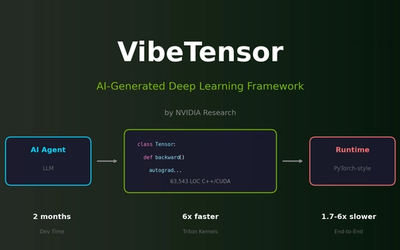
VibeTensor: Can AI Build a Deep Learning Framework from Scratch?
NVIDIA researchers released VibeTensor, a complete deep learning runtime generated by LLM-based AI agents. With over 60,000 lines of C++/CUDA code written by AI, we analyze the possibilities and limitations this project reveals.
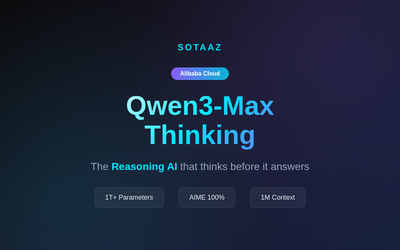
Qwen3-Max-Thinking Snapshot Release: A New Standard in Reasoning AI
The recent trend in the LLM market goes beyond simply learning "more data" — it's now focused on "how the model thinks." Alibaba Cloud has released an API snapshot (qwen3-max-2026-01-23) of its most powerful model, Qwen3-Max-Thinking.
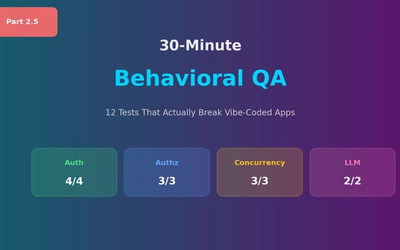
30-Minute Behavioral QA Before Deploy: 12 Bugs That Actually Break Vibe-Coded Apps
Session, Authorization, Duplicate Requests, LLM Resilience — What Static Analysis Can't Catch